ServicesRoof-Mounted Solar
Roof-Mounted Solar in Murphy, TX
We put solar panels on your roof the slow, careful way. Every mount goes into a rafter, every hole gets flashed, and the wiring stays off the shingles. Before any of that, you get a written quote that spells out the layout, the parts and what drives the price.
What roof-mounted solar is, and when it fits
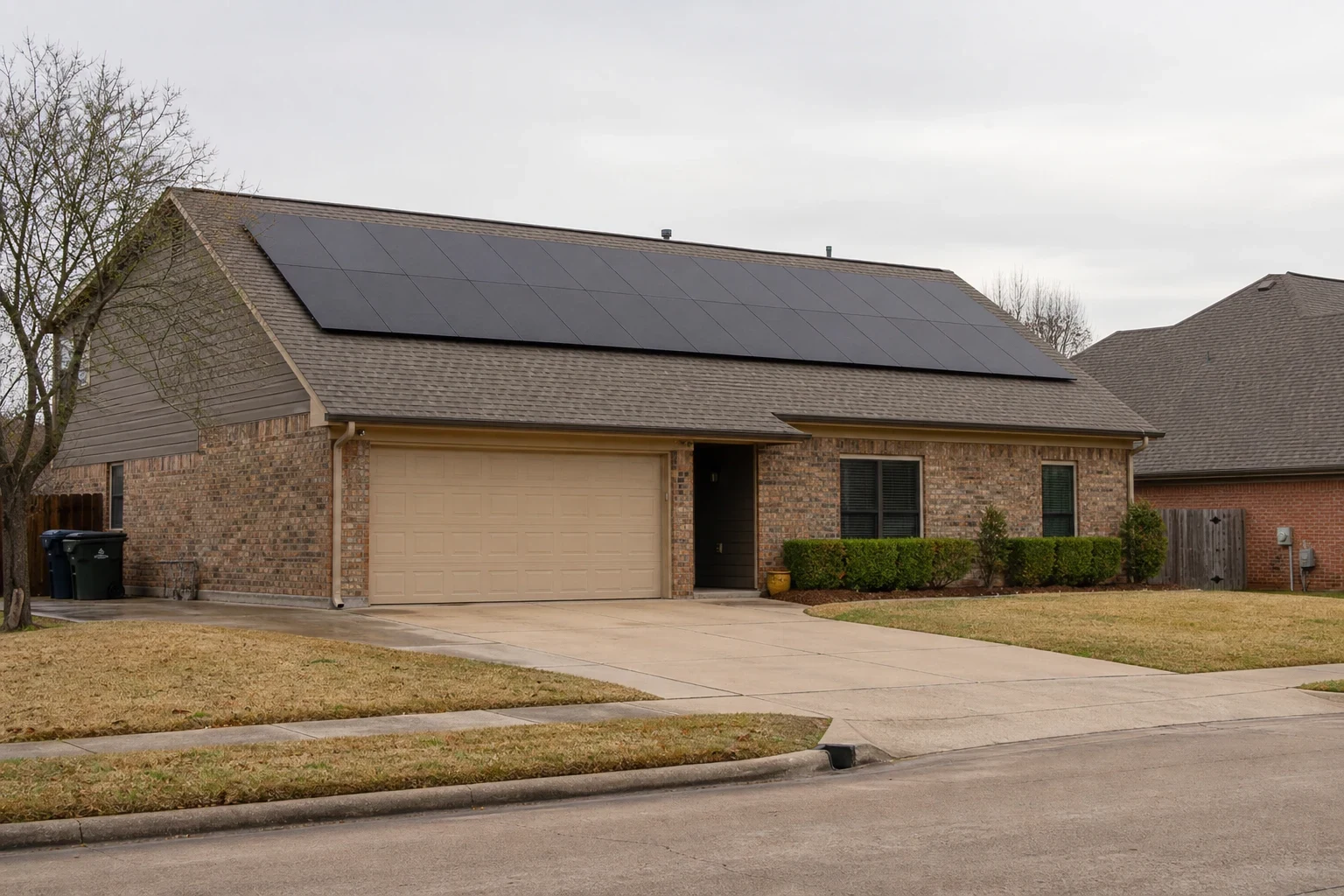
Most homes that go solar put the panels on the roof. It uses space you already have, keeps the yard open and puts the array up where the sun hits it all day. The work is mostly about the attachment: a rail system bolted through the roof deck into the framing, sealed so water never finds the hole.
It is the right call when you have a roof face that points south or west, not much shade from trees, and shingles with plenty of life left. Worn or curling shingles are worth knowing about before panels go up. If we spot them during our visit, you will hear it from us, because pulling the array off later for a new roof means paying for labor twice.
We have been in business 5 years. The roof is where most solar problems start, so it is where we spend the most care.
What the job includes
- Roof and attic check
- We walk the roof, look at the decking and go into the attic to find the rafters and check their spacing and condition. This tells us where mounts can go and whether anything needs attention first.
- Flashed mounts into the rafters
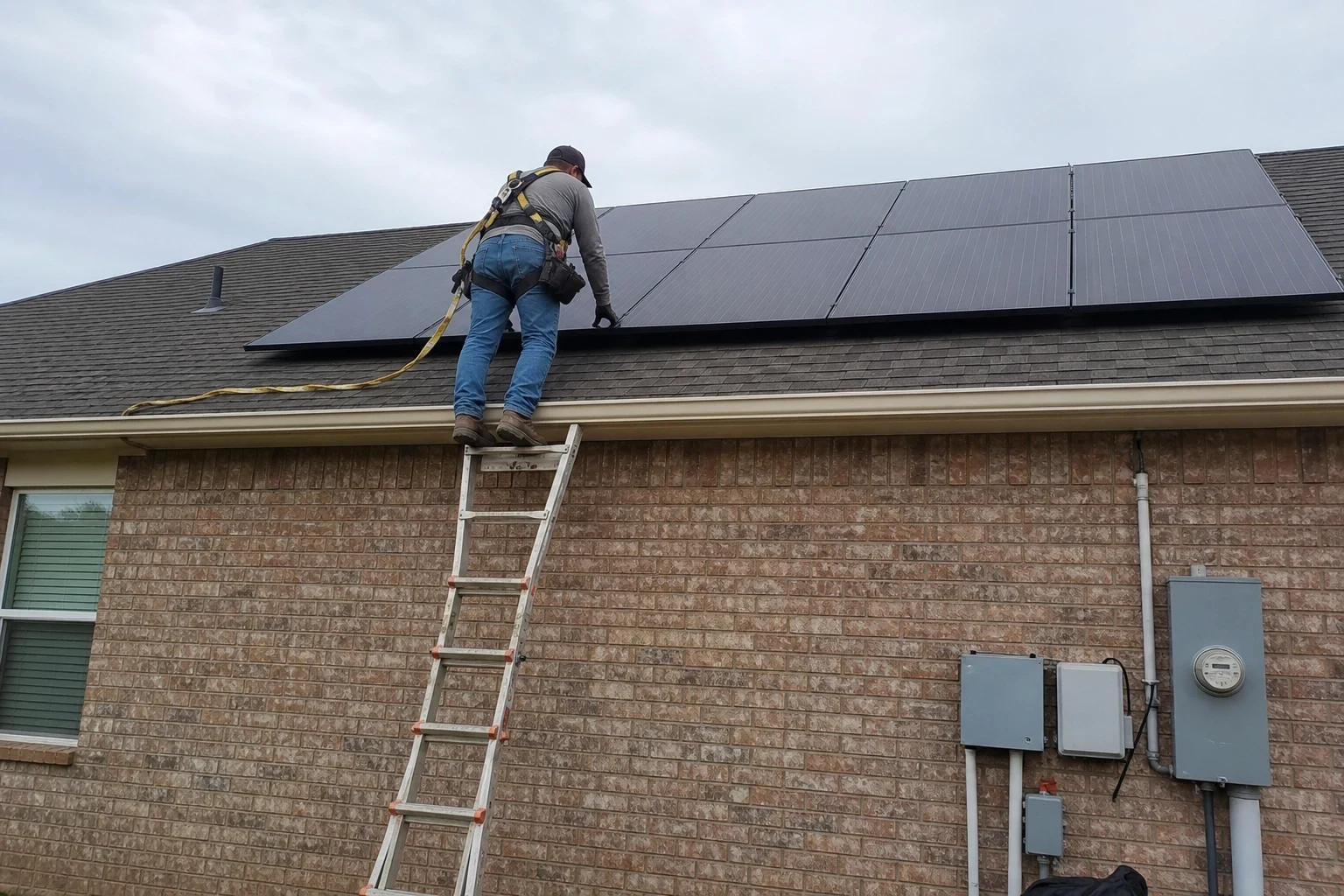
- Each mount is lagged into a rafter, not just the decking. A metal flashing slides under the shingle above it and sealant goes in the hole, so rain runs over the mount instead of into it.
- Rails, clamps and panels
- Aluminum rails sit on the mounts and the panels clamp to the rails. We set the layout to keep panels back from the roof edges and ridge, which helps in North Texas wind.
- Tidy wire management
- Panel wires are clipped to the rails and kept off the roof surface. Where the conduit runs down to the inverter or meter, we keep it neat and as short as the layout allows.
- Permits and interconnection
- Getting the city permit is our job, and so is booking the inspector. We also fill out the utility's interconnection forms, so that stack of paperwork never lands on your kitchen table.
- Cleanup and a walk-through
- We pick up packaging, cut ends and screws from the yard and gutters. Then we show you the system, the shutoffs and how to read your production.
Signs roof-mounted solar makes sense for you
Summer bills are climbing
Long hot months mean the AC runs hard. Panels make the most power on those same bright afternoons.
A south or west roof face
Those faces get the most sun through the day. East faces can work too; we will show you the expected numbers for each.
Little shade on the roof
A big tree over the best roof face cuts output a lot. If shade is light or only early in the day, the roof is usually a good fit.
Your shingles have years left
Solar panels last a long time. They belong on a roof that will not need to come apart soon.
You want to keep the yard
A ground mount takes up lawn. The roof puts that space to work without changing how you use the yard.
What moves the price
No two roofs price out the same. The quote you get from us lists each of these items so you can see where the money goes. Nothing gets added after you sign unless you ask for it.
System size
More panels mean more mounts, rail and labor. Size comes from your actual power use, not a guess.
Roof type and pitch
Composition shingle is the most common and the simplest to mount on. Tile or a steep pitch takes more time, more safety setup and different hardware.
Number of roof faces
Splitting panels across two or three faces adds rail, wiring and sometimes another inverter input.
Electrical panel
Some older electrical panels are already full and cannot take one more breaker. When that is true at your home, we point it out during the visit and show the upgrade as its own line on the quote.
Equipment choice
Microinverters, a string inverter and different panel brands all price differently. We explain the tradeoffs in plain words.
How the work goes, step by step
- 1
Visit and measure
We look at the roof, the attic, your electric panel and a year of your power bills. We measure roof faces and note shade.
- 2
Written quote
You get a quote on paper that lists the panel count, the mounts, the inverter and every other line item. If something could change the price, like an electrical panel upgrade, it is written down before you sign.
- 3
Permit and approval
The city and the utility both review the plans, and we handle that back-and-forth for you. Install day gets set once both approvals come back.
- 4
Install day
Most roofs take one to two days. The crew sets mounts and flashing first, then rails, panels and wiring, and the inspector checks the work after.
- 5
Turn on
After the inspection passes and the utility gives the go-ahead, we turn the system on and walk you through it.
Questions about roof-mounted solar
Will drilling into my roof cause leaks?
Not when the mounts are done right. Every mount goes into a rafter and gets a metal flashing under the shingle above it, plus sealant. Water runs over the flashing the same way it runs over the shingles.
Is the work covered if something goes wrong?
Yes. We give a 10-year workmanship warranty on solar, so if a mount we installed leaks or our wiring fails, we come back and fix it. Panel and inverter makers have their own warranties on the equipment, and we list them in your paperwork.
How do you keep the crew safe on my roof?
Every crew member ties off to a roof anchor and we set up before anyone works near an edge. Our company has earned the Liberty Mutual Platinum Safety Award, and we run every job with that same care.
Can the panels handle hail and high wind?
Panels are built with tempered glass rated for hail, and the rails are rated for strong wind when mounted to the framing. Big storms can still do damage, so it is worth adding the system to your home insurance policy. We can explain what to tell your agent.
What if a panel needs work later?
Panels can come off the rails without touching the mounts. If a panel or wire ever has a problem, our solar repair service handles it, and dusty or pollen-coated panels can be handled with panel cleaning.
Do you also do batteries?
Yes. If you want backup power or to store daytime power for the evening, battery storage can be added to the quote now or later.
Ready to see what your roof can do?
Tell us a little about your home and your power bills. We will set up a visit and put the full scope and price in writing before any work starts.